Currently Empty: R0.00

An open letter to the woman who looked after everyone – except herself
Dear Mum,
I’ve been thinking about you lately. Not in the way I usually do – the quick check-in call on a Sunday, the WhatsApp message when something reminds me of you. I mean really thinking about you. About the years you put in. About what that actually cost you, physically, in ways neither of us ever really talked about.
Because we didn’t, did we? Talk about it.
We talked about everyone else’s health. The kids’ check-ups, dad’s cholesterol, the neighbour’s hip replacement. You were always the one gathering information, making appointments, following up, ensuring everyone else was seen to. But when it came to you – your tiredness, your aching joints, the headaches you mentioned once and then never again – somehow the conversation always moved on.
I don’t think that was an accident. I think it was simply who you were. Who you are.
But I’ve been wondering lately what it would have looked like if someone had sat down with you – really sat down – and asked how you were doing. Not as a mother. Not as a wife or a daughter or a colleague. Just as a person. A body that had been working extraordinarily hard for an extraordinarily long time.
What nobody tells you about the years of giving
There is a particular kind of depletion that comes with sustained caregiving. It is not dramatic. It does not arrive all at once. It accumulates – quietly, incrementally, in the background of a life that is always oriented outward.
Pregnancy draws heavily on a woman’s nutritional reserves – calcium, iron, folate, magnesium, zinc – transferring them preferentially to the developing baby regardless of whether the mother has enough to spare. Breastfeeding continues that transfer. And then the caregiving years begin in earnest, bringing with them chronic sleep disruption, elevated stress hormones, irregular meals eaten standing up, and the particular exhaustion of a body that never fully switches off.
Each of these demands is manageable in isolation. Together, sustained over years, they create a deficit that most mothers never fully address – because by the time the children are old enough to not need constant attention, the habit of self-neglect is already deeply ingrained.
The tiredness that you explained away as just being busy. The hair that changed texture after your second child and never quite went back. The joint stiffness you started mentioning in your fifties that everyone – including you – attributed to getting older. These were not inevitable. They were your body communicating, in the only language available to it, that it needed something it wasn’t getting.
The nutrients that caregiving quietly takes
Iron is perhaps the most commonly depleted nutrient in women of caregiving age – yet it is also among the most commonly overlooked. Low iron does not always announce itself dramatically. More often it shows up as persistent fatigue, difficulty concentrating, a low-level flatness that is easy to mistake for stress or simply the demands of a busy life.
Magnesium is depleted rapidly by chronic stress – and caregiving, for all its rewards, is one of the most sustained forms of stress the human body experiences. Magnesium plays a role in sleep quality, muscle function, mood regulation, and nerve health. Its quiet depletion over years contributes to the kind of background exhaustion and emotional fragility that mothers so often dismiss as just how things are.
Vitamin C – consumed at an accelerated rate during periods of physical and psychological stress – supports immune function, collagen production, iron absorption, and the body’s ability to manage inflammatory processes. Vitamin D, so often low in women who spend their days indoors managing households and careers, underpins bone density, immune health, and mood in ways that become increasingly significant with age.
Calcium quietly leaves the bones during pregnancy and breastfeeding. If it is not consistently replenished over the years that follow, the consequences show up decades later – in bone density assessments, in fracture risk, in the stooped posture that we associate with ageing but that is, in many cases, the long-term result of years of nutritional deficit.
None of this is your fault, Mum. Nobody told you. And even if they had, I am not sure you would have prioritised it over everything else that needed your attention.
The conversation we should have had sooner
I think about the questions I wish I had asked. Not the practical ones – are you sleeping, are you eating – but the deeper ones. How does your body actually feel? Not relative to last year or relative to your friends or relative to what you think you should expect at your age. Just – how do you feel? What would feeling genuinely well look like for you?
Because I suspect the answer might have surprised both of us.
The women I know who have taken those questions seriously – who have, often for the first time in their adult lives, genuinely invested in their own health with the same thoroughness they brought to everyone else’s – describe something that is less like a dramatic transformation and more like a gradual return. Energy that was so long absent they had forgotten what it felt like. Clarity that had been obscured for years by a fog they had simply accepted as normal. A sense of occupying their own body more fully.
It is not too late for that conversation, Mum. It was never too late.
A note to the daughters and sons reading this
If your mother is the woman I have been describing – the one who always knew where everyone else’s medical aid card was but couldn’t tell you the last time she had her own bloods done – this Mother’s Day might be the moment to change that.
Not with a gift that sits on a shelf. With a conversation. A real one, about how she is actually doing, what her body has been telling her, and whether she has been listening.
And then, perhaps, with the kind of practical support that helps her do something about it.
Because the woman who spent years ensuring everyone else was looked after deserves, finally, to be looked after too.
And to the mothers reading this themselves
You already know, somewhere beneath the busyness, that your body has been asking for more than it has been getting.
You know the tiredness that sleep does not fix. The resilience that feels a little thinner than it used to. The sense that you have been running on something less than a full tank for longer than you can quite remember.
That is not ageing. That is not weakness. That is a body that has given generously and consistently for a very long time – and that is quietly, patiently, asking to be replenished.
You would not ignore that message in someone you loved. Perhaps it is time to extend yourself the same courtesy.
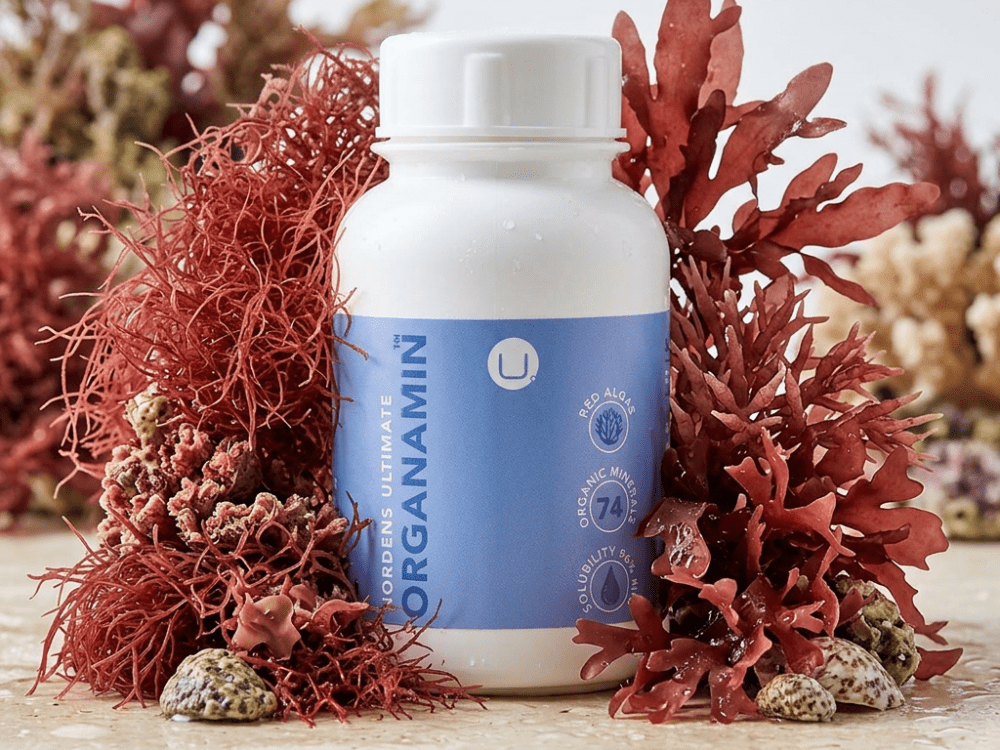
Nordens Ultimate’s range is formulated to support women’s health at every life stage – from daily mineral replenishment and immune support to hair and skin vitality. Explore the full range at Nordens.co.za.